
Headache & Migraine Clinic
Home / Headache & Migraine Clinic
Specialist assessment for headaches, migraine, dizziness and concussion
Recurring headaches or migraines can affect far more than your head. They can interrupt work, exercise, sleep, concentration and everyday life — and when dizziness or balance problems are involved, even simple movements can become difficult.
At Bearsden Osteopaths, Tom has a particular clinical interest in headaches, migraines, concussion and Vestibular Rehabilitation Therapy (VRT).
Your appointment starts with understanding your symptoms: what they feel like, how frequently they occur, possible triggers and how they affect your everyday life.
Your assessment may include examining your neck, back and general movement, alongside relevant neurological, orthopaedic or vestibular testing where appropriate.
From there, we’ll explain what we find and develop an individual treatment or management plan based on your symptoms and assessment.
Headaches & migraines
There are many different types of headache, and understanding the pattern of your symptoms is an important part of deciding what may help.
Some headaches can have a musculoskeletal component, particularly where neck pain, stiffness or muscular tension occurs alongside the headache. Migraine is a neurological condition and may involve symptoms beyond head pain, including nausea, sensitivity to light or sound, visual disturbance and dizziness.
Rather than assuming every headache has the same cause, we’ll take time to understand your symptoms and look for factors that may be contributing to them.
Treatment may include:
- Osteopathic hands-on treatment
- Soft tissue techniques
- Joint mobilisation
- Medical acupuncture
- Advice around movement and activity
- Exercises or rehabilitation
- Vestibular rehabilitation where dizziness or balance problems are involved
If your symptoms suggest that further medical assessment or investigation is needed, we’ll explain this and refer you appropriately.
Vestibular Rehabilitation Therapy (VRT)
The vestibular system helps your brain understand where your head and body are in space and plays an important role in balance, stability and coordination.
When this system isn’t functioning normally, you may experience dizziness, vertigo, unsteadiness, nausea, visual disturbance or difficulty tolerating particular movements.
Vestibular Rehabilitation Therapy (VRT) uses individually selected exercises and rehabilitation techniques to help the brain and body adapt to vestibular problems.
Depending on your assessment, this may include:
- Balance and stability exercises
- Eye and head movement exercises
- Vestibular compensation exercises
- Gradual exposure to movements that provoke dizziness
- Coordination and movement rehabilitation
VRT may be appropriate for people experiencing conditions or symptoms associated with BPPV, vestibular neuritis, Meniere’s disease, Migrainous vertigo, vestibular migraine, age related balance issues and some persistent symptoms following concussion.
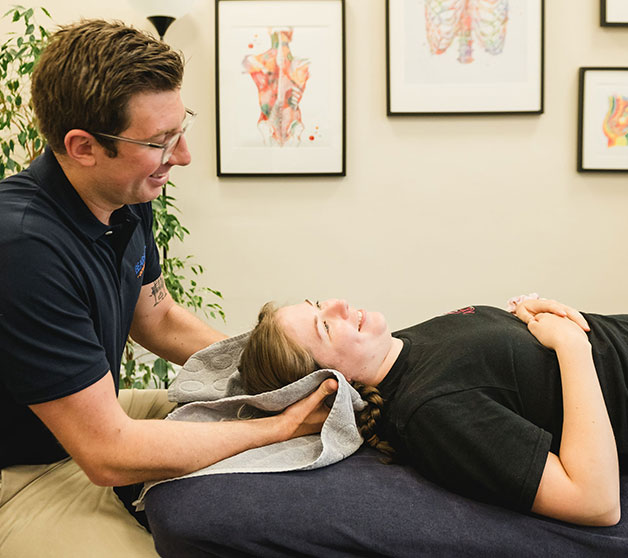
How Does VRT Work?
Each VRT program is customized to the individual’s needs and may include:
Balance training focuses on improving stability and control, helping individuals regain confidence in their movement. It involves exercises designed to strengthen the muscles that support posture and coordination, particularly those in the legs, core, and back. By enhancing proprioception (the body's sense of spatial awareness), patients can improve their ability to stand, walk, and perform daily activities with reduced risk of falling.
Vestibular compensation is a process where the brain learns to adapt to changes or dysfunction in the inner ear, which is responsible for balance and spatial orientation. When the vestibular system is impaired, the brain needs to recalibrate its signals to maintain balance and stability.
For individuals who experience dizziness triggered by certain head or body movements, desensitization therapy helps reduce sensitivity and improve tolerance to these motions.
Coordination strengthening focuses on improving the connection between the brain, muscles, and sensory systems to enhance controlled movements and spatial awareness. Many balance disorders disrupt the body's ability to respond accurately to movement, increasing the risk of falls and disorientation.
Who can benefit?
It is particularly beneficial for conditions affecting the inner ear and balance system, including:
- – BPPV (Benign Paroxysmal Positional Vertigo)
- – Vestibular neuritis
- – Meniere’s disease
- – Migrainous vertigo
- – Post-concussion syndrome
- – Age-related balance disorders
What are the benefits of VRT?
✔️ Significant reduction in dizziness and vertigo
✔️ Enhanced balance and mobility
✔️ Greater independence in daily activities
✔️ Personalized treatment plans tailored to your needs
Concussion
Concussion is a brain injury and should be taken seriously — even when there has been no loss of consciousness.
Symptoms can include headache, dizziness, nausea, sensitivity to light or noise, difficulty concentrating, fatigue, balance problems or simply feeling unlike yourself.
Early assessment is important.
If you suspect a concussion following a recent head injury, particularly if symptoms are severe or worsening, appropriate medical assessment should come first. Some symptoms following a head injury require urgent medical attention.
Once serious injury has been excluded, you don’t necessarily need to wait until every symptom has disappeared before seeking support.
Assessment in the early stages can help establish what symptoms you’re experiencing and guide a gradual return to normal daily activity. If symptoms such as dizziness, headaches, visual disturbance or balance problems persist, more targeted rehabilitation — including VRT where appropriate — may form part of your recovery.
For athletes, Tom can also help guide a structured return to activity and sport following concussion rather than relying solely on whether you “feel fine”.
How Osteopathy Can Help with Headaches
By focusing on the neck, shoulders, and cranial structures, we aim to relieve tension, improve cervical spine mobility, and enhance overall function. This drug-free, natural treatment can help patients achieve long-term relief and improve quality of life.
Soft tissue manipulation
Relieving tension in muscles and fascia.
Cranial osteopathy
Gently improving cranial and spinal function.
Myofascial release
Reducing restrictions and improving mobility.
What happens at your appointment?
We’ll begin by taking a detailed history of your headaches, migraines, dizziness or concussion symptoms.
We may ask about when your symptoms started, their frequency and duration, previous injuries, medication, triggers and any other neurological or physical symptoms you’ve noticed.
Your assessment will then be tailored to your symptoms and may include examination of your neck and musculoskeletal system, neurological screening, balance and coordination testing, eye or head movement assessment and vestibular testing where appropriate. We’ll explain our findings clearly and discuss the next steps with you.
Treatment is individual. Depending on what we find, this could involve hands-on osteopathic treatment, medical acupuncture, exercises, vestibular rehabilitation, advice around activity or onward referral where appropriate.
Headache, migraine & vestibular care in Bearsden, Glasgow
Our clinic at Bearsden Cross welcomes patients from Bearsden, Milngavie, Anniesland, Glasgow’s West End and Greater Glasgow.
Tom has a particular clinical interest in headaches, migraines, concussion and vestibular rehabilitation, allowing us to offer more specialised assessment where head pain occurs alongside symptoms such as dizziness, vertigo or balance disturbance.