
Babies and Children
Home / Babies and Children
Osteopathy for Babies and Children
Osteopathy for babies and children is a specialised branch of osteopathic medicine that focuses on the unique needs of younger patients. Using gentle, non-invasive techniques, osteopaths assess and treat a variety of conditions, supporting natural healing and healthy development from infancy through childhood.
Who Can Benefit from Osteopathy?
Osteopathic treatment is based on the principle that the body functions as a whole, with all systems working in harmony. By addressing the root causes of discomfort rather than just the symptoms, osteopathy can contribute to a child’s long-term well-being.
Osteopaths use cranial osteopathy, a light-touch technique that releases tension and improves function without causing discomfort. This method is particularly well-suited for infants and young children, as it is both safe and effective.
Specialist Paediatric Care
Paediatric osteopathy requires an understanding of how babies and children’s bodies develop, move and change as they grow.
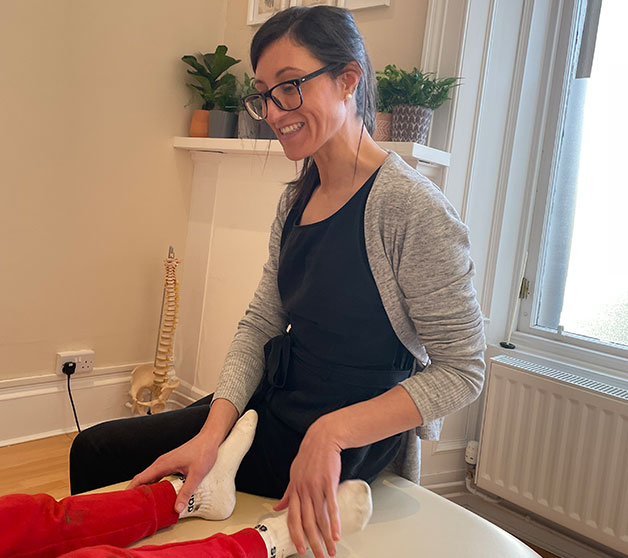
Our paediatric osteopath, Laura, has undertaken specialist postgraduate training in paediatric osteopathy and works specifically with babies, toddlers and children.
Appointments are adapted to the age and needs of each child. With babies this means very gentle assessment and treatment, while an older child may need a more familiar musculoskeletal assessment based around their pain, movement, sport or injury.
Just as importantly, we’ll explain what we’re assessing, what we find and what we think should happen next.
Osteopathy for Babies
The birthing process can be physically demanding for both mother and baby, sometimes leading to musculoskeletal strains or imbalances. Osteopathy can help.
There are many reasons why a baby may be unsettled or uncomfortable, and osteopathy isn’t appropriate for every one of them.
Parents may also seek advice when their baby is experiencing symptoms such as colic, reflux or silent reflux. Parents bring babies to us for assessment of concerns including:
- Head preference or difficulty turning one way
- Flat head shape (plagiocephaly or brachycephaly)
- Neck stiffness or restricted movement
- Musculoskeletal tension
- Concerns following a difficult or traumatic birth
- Babies who appear uncomfortable
- General movement or postural concerns
- Concerns about how their baby is moving or developing
- Problems with feeding or latching
These symptoms can have many different causes. We’ll listen to what’s happening, assess your baby and decide whether there are musculoskeletal factors we may be able to help with.
If something doesn’t appear appropriate for osteopathic care, we’ll tell you and recommend that you speak to your GP, health visitor or another appropriate healthcare professional.
The birthing process
can place stress on a baby’s body. Osteopathy uses gentle hands-on techniques that aim to ease areas of tension and support natural movement.
Some parents seek osteopathic care
when their babies show signs of colic or reflux. Osteopathy uses gentle techniques which aim to relax the body and improve comfort.
Gentle osteopathic care
may help babies feel more relaxed, which some parents find supports more settled routines.
Our osteopaths work very gently with babies and never perform manipulations on infants. Instead, we use soft, hands-on techniques to encourage natural movement and balance.
Osteopathy for Children
By ensuring proper function and mobility, osteopathy can help children stay active, pain-free, and develop strong movement patterns for the future.
As children grow, their bodies undergo rapid changes. Osteopathy can help support healthy musculoskeletal development and manage common childhood conditions.
Childhood is wonderfully physical.
Running, climbing, falling over, starting new sports and growing rapidly can occasionally result in aches, pains and injuries.
Children and teenagers may come to see us with:
- Sports injuries
- Muscle and joint pain
- Back or neck pain
- Shoulder, elbow, wrist, hip, knee or ankle pain
- Pain following a fall or minor injury
- Movement problems following an injury
- Recurring musculoskeletal discomfort
Assessment is adapted to your child’s age, symptoms and activity.
For a sporty child or teenager, that may include looking at the movements involved in their sport. For a younger child, assessment may be much more informal and based around how they naturally move.
Where treatment is appropriate, it may include gentle hands-on techniques alongside movement, exercise or activity advice.
Some children experience aches during growth phases
Osteopathy may help ease tension and support comfort during these times.
Modern lifestyles can affect posture
Osteopathic techniques aim to support good mobility and postural habits.
Osteopaths use manual techniques
to support recovery from activity-related strain and help maintain healthy movement patterns.
By ensuring proper function and mobility, osteopathy can help children stay active, pain-free, and develop strong movement patterns for the future.
Osteopathic care for babies and children is a complementary approach. It is not a substitute for medical advice. Please consult your GP or health visitor if you have concerns about your child’s health.
A gentle, child-led approach
Children deserve the same respect and involvement in healthcare as adults.
We’ll explain treatment in language appropriate to your child’s age and make sure they’re comfortable with what we’re doing.
If a child doesn’t want a particular technique or needs a break, that’s okay. Treatment can be adapted.
For babies, appointments are equally flexible. Feeding, changing, cuddles and settling don’t inconvenience us – they’re simply part of working with babies.
When should my child see a doctor instead?
Osteopathy is not a replacement for appropriate medical care.
Babies and young children can’t always tell us when something is seriously wrong, so we’ll always take concerns about their health seriously.
If your baby or child is acutely unwell, has a fever, difficulty breathing, persistent vomiting, unusual drowsiness, a significant injury or head injury, sudden severe pain, loss of movement or strength, or you’re otherwise seriously concerned about their health, seek appropriate medical advice.
If we’re concerned by anything during an appointment, we’ll explain why and recommend the appropriate next step.
Paediatric Osteopathy in Bearsden, Glasgow
Our paediatric service provides specialist osteopathic assessment and treatment for babies, children and teenagers.
From our clinic at Bearsden Cross, we welcome families from Bearsden, Milngavie, Anniesland, Glasgow’s West End and surrounding areas.
You don’t need to know whether osteopathy is what your baby or child needs before contacting us. Tell us what’s concerning you and we’ll help you work out the appropriate next step.